
A patellar tendon injury can pass for an ordinary knee ache, and the difference is easy to miss until a simple task gets hard. This article names the injury, lists the signs that set it apart, and ends on what to ask before you agree to any work.
The tendon and the cost of missing it
OrthoInfo explains the tendon's job: The patellar tendon works with the muscles in the front of your thigh to straighten your leg. Small tendon tears can make it difficult to walk and participate in other daily activities.
That makes the cost of mistaking a tear for a routine ache concrete. A tendon that cannot do its job affects every step, not only the run you were planning. Knee pain has many possible causes, and a page on knee pain and what lies behind it shows why guessing is a poor plan.
Signs that point to the tendon
Each sign below follows from the tendon's job.
- Trouble straightening the leg. The tendon works with the thigh muscles to straighten the leg, so a leg that will not extend as it used to points straight at that structure.
- Walking that has become difficult. A small tear is enough to change how you walk, so a limp that does not clear is a reason to be examined.
- Daily activities that have started to feel hard. A small tear can interfere with daily activities, so a task that used to be easy and no longer is belongs in what you tell the examiner.
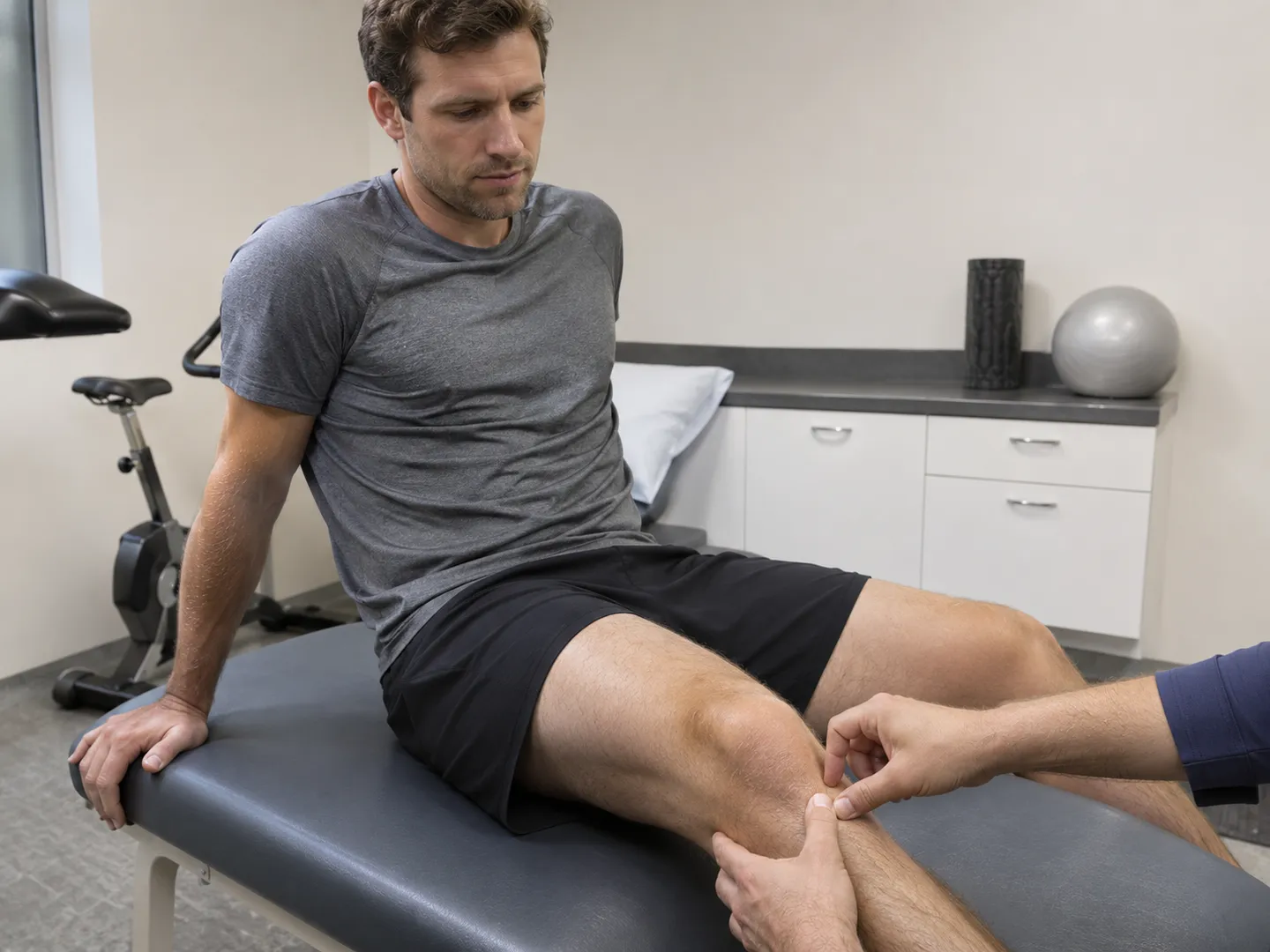
Swelling near the knee is a different question from a tendon problem, and the exact spot matters when you describe it. A healthdirect overview of bursitis shows another condition people compare it with.
Sports injuries and other tendons
For the wider picture, a general overview of sports injuries covers types, symptoms and risk factors. If you want to see how tendon trouble looks in a very different joint, the entry on rotator cuff problems is a useful contrast.
Questions about the tendon before any work
Ask which structure is injured and how that was confirmed. Ask what the proposed treatment is meant to change, and what happens to your daily activities if you wait. Ask what sign would show the tendon is recovering. You can also read the parent guide on knee pain in active adults to compare this injury with the others.